With SpaceX's Falcon family of rockets delivering on cheap, reliable access to orbit, and with the real possibility of even cheaper (reusable) rockets in the near future, the Delta and Atlas rockets operated by the United Launch Alliance (ULA) are obsolete. There's no future for a launch service that cannot compete at the new price levels.
Unfortunately for ULA, once the Falcon rockets are reusable, there's no way an expendable rocket can compete on price. ULA must find a way to make their rockets reusable. But landing rockets (in a way that they are immediately available for a new launch, as opposed to needing months of expensive refurbishment like the Space Shuttle or its SRBs) is a very hard technical problem, and ULA is way, way behind SpaceX in solving it.
Which brings us to today's news: ULA has announced the Vulcan rocket, which they hope will fly within four years.
Cheap, reusable rockets don't just come together within four years though, and ULA has been sitting on their hands for years hoping SpaceX would just go away. In order to meet this timeline, ULA has basically given up on making an engine or learning how to land a rocket.
The engines for the Vulcan are going to be made by Blue Origin, Jeff Bezos' rocket company that has been working on building a reusable system for at least ten years now. This is consistent at least with the current Atlas rocket - ULA doesn't make those engines either, but buys them from the Russians. Despite the storied history of Boeing and Lockheed, their institutional expertise at building rocket engines has been allowed to atrophy and die over the last several decades, and Vulcan will not revive it.
Secondly, the Vulcan won't even land, Instead its engine module (the most expensive part) will detach from the main body, use an inflatable aerobrake shield to reenter the atmosphere, then parachutes, and then be snatched out of the air by a really big helicopter before it crashes into the ground. If that sounds more like a circus trick than a reliable mode of transport, you're not wrong. The comparison between this system, and the Falcon 9's powered and steerable descents, could not be more amusing. ULA is desperate to save and reuse the main boost engines, and the best they can do is this Rube Goldberg contraption.
And despite all that effort, ULA's cost target for a Vulcan launch is $100 million. And that's four years from now, assuming everything is on time and on budget. Compare that to $61 million for a Falcon 9 today or $90 million for the (upcoming but even more capable) Falcon Heavy. And those costs will be cut in half, at least, once SpaceX licks the reusability problem.
This desperate bid for technical relevance by ULA would be hilarious if it wasn't such an inglorious end to America's first space-age companies.
Tuesday, April 14, 2015

Thursday, April 9, 2015
The EM Drive
Since following technology is a hobby for me, I follow the technology development that's fun to think about succeeding, even if the odds are low.
One of my favorites is the EM Drive. It's a proposed thruster for spacecraft which claims to produce thrust without reaction mass. It turns pure electricity into linear thrust, without having to throw anything out the back of the ship. There are similar research projects around the world looking into what seems to be the same phenomena, including Paul March's work on a Mach-Lorentz thruster, the Cannae drive invented by Guido Fetta, and replication work of the EM Drive being done by some researchers in China.
If the EM Drive or something like it ever works, it would initially not help us reach orbit. The thrust is too low to escape Earth's gravity. You'd still need chemical rockets to reach space. Once you're in space though, things change. A small but steady thrust can add up to very high velocity, helping making trips to Mars or further out much faster. Instead of reaching the outer planets in years, it would only take a few months, much like a ocean voyage during the age of tall ships. Further, since you don't need to bring reaction mass with you (and most of a space craft's mass is currently devoted reaction mass and/or oxidizer) it opens up the mass budget of any space mission to add more crew or science payloads.
Here's a current summary of where EM Drive research is sitting. (Be sure to reach the comments. Next Big Future is the rare website where the comments are almost always value-ad) The very short summary is that very small thrusts have been measured at NASA facilities, and now they're trying to scale it up a bit. If they can get it to scale up even a little it will be immediately useful on satellites and space stations for help maintaining their orbit. And then with a little more scaling, the whole solar system becomes available for exploration and settlement.
(And if it can continue to scale, further out you might eventually get that X-34 Landspeeder).

One of my favorites is the EM Drive. It's a proposed thruster for spacecraft which claims to produce thrust without reaction mass. It turns pure electricity into linear thrust, without having to throw anything out the back of the ship. There are similar research projects around the world looking into what seems to be the same phenomena, including Paul March's work on a Mach-Lorentz thruster, the Cannae drive invented by Guido Fetta, and replication work of the EM Drive being done by some researchers in China.
If the EM Drive or something like it ever works, it would initially not help us reach orbit. The thrust is too low to escape Earth's gravity. You'd still need chemical rockets to reach space. Once you're in space though, things change. A small but steady thrust can add up to very high velocity, helping making trips to Mars or further out much faster. Instead of reaching the outer planets in years, it would only take a few months, much like a ocean voyage during the age of tall ships. Further, since you don't need to bring reaction mass with you (and most of a space craft's mass is currently devoted reaction mass and/or oxidizer) it opens up the mass budget of any space mission to add more crew or science payloads.
Here's a current summary of where EM Drive research is sitting. (Be sure to reach the comments. Next Big Future is the rare website where the comments are almost always value-ad) The very short summary is that very small thrusts have been measured at NASA facilities, and now they're trying to scale it up a bit. If they can get it to scale up even a little it will be immediately useful on satellites and space stations for help maintaining their orbit. And then with a little more scaling, the whole solar system becomes available for exploration and settlement.
(And if it can continue to scale, further out you might eventually get that X-34 Landspeeder).

Wednesday, April 8, 2015
Private Spaceships
Forbes has a gallery of the private spacecraft currently in development.
Including the Worldview balloon and Bigelow's projects are category errors (balloons can never reach space, and without propulsion Bigelow modules aren't "craft"), but they're still cool so I'll allow it.
The good news is that none of these projects are paper rockets. They're all real hardware with real teams. That's no guarantee they will all succeed, but this commercial activity is a refreshing change from the endless SLS and Orion development being done by NASA recently.
Including the Worldview balloon and Bigelow's projects are category errors (balloons can never reach space, and without propulsion Bigelow modules aren't "craft"), but they're still cool so I'll allow it.
The good news is that none of these projects are paper rockets. They're all real hardware with real teams. That's no guarantee they will all succeed, but this commercial activity is a refreshing change from the endless SLS and Orion development being done by NASA recently.
Wednesday, April 1, 2015
Lockheed's bid for relevance
Lockheed and Boeing are the grand dames of American aerospace, having long gobbled up their competitors. Both firms have grown comfortable in the lack of competition, and have even eliminated each other as competitors in the space launch business by forming the United Launch Alliance partnership to operate their Delta and Atlas rockets. Their business model is one of government cost-plus contracts with limited competition and a sprawling collection of sub-contractors.
Into this landscape came SpaceX a few years ago, and they have eschewed cost-plus contracts for fixed price offerings with the price listed on their website (a first in space launch), sprawling webs of sub-contractors for vertical integration, and stable technology states for constantly improving systems. Together these innovations have to date reduced the cost of reaching orbit by nearly 2/3rds, and near-term innovations like the Falcon Heavy and reusable rockets threaten to lower costs even further. These cost reductions have allowed SpaceX to capture significant portions of the private satellite launch business and also large contracts from NASA.
I suspect that when SpaceX first came onto the scene the executives at Lockheed and Boeing were skeptical they would succeed and probably figured they could just wait for SpaceX to go bankrupt and then go back to business any normal. Any disruption to their business would likely be temporary.
However likely SpaceX's failure was ten years ago though, it is now very unlikely to fail in the near term. The Falcon 9 is a proven system, and SpaceX doesn't even need the Falcon Heavy or reusable rockets to continue to dominate the launch market. And since the Falcon Heavy is just three of the Falcon 9's proven launch cores strapped together, odds of its success are good. Even the heavy lift launch market is under threat from SpaceX.
So what should Lockheed and Boeing do? The fact is that their rockets cannot compete with the Falcon rockets as the Falcon rockets exist today. If the Falcon rockets become reusable and lower prices another order of magnitude, it's well and truly game over.
This background understanding is necessary to evaluate the announcement from Lockheed about their Jupiter spacecraft and Exoliner cargo vessel. This project, and its announcement, is Lockheed conceding that SpaceX has succeeded in changing space business and that there's no going back. Consider the following:
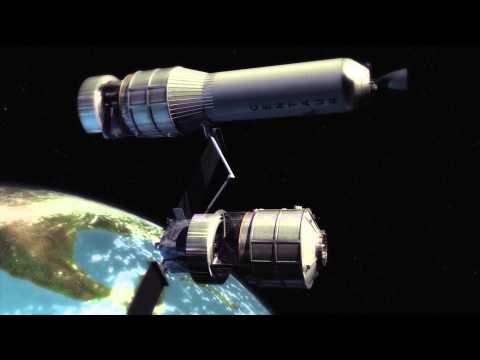
Into this landscape came SpaceX a few years ago, and they have eschewed cost-plus contracts for fixed price offerings with the price listed on their website (a first in space launch), sprawling webs of sub-contractors for vertical integration, and stable technology states for constantly improving systems. Together these innovations have to date reduced the cost of reaching orbit by nearly 2/3rds, and near-term innovations like the Falcon Heavy and reusable rockets threaten to lower costs even further. These cost reductions have allowed SpaceX to capture significant portions of the private satellite launch business and also large contracts from NASA.
I suspect that when SpaceX first came onto the scene the executives at Lockheed and Boeing were skeptical they would succeed and probably figured they could just wait for SpaceX to go bankrupt and then go back to business any normal. Any disruption to their business would likely be temporary.
However likely SpaceX's failure was ten years ago though, it is now very unlikely to fail in the near term. The Falcon 9 is a proven system, and SpaceX doesn't even need the Falcon Heavy or reusable rockets to continue to dominate the launch market. And since the Falcon Heavy is just three of the Falcon 9's proven launch cores strapped together, odds of its success are good. Even the heavy lift launch market is under threat from SpaceX.
So what should Lockheed and Boeing do? The fact is that their rockets cannot compete with the Falcon rockets as the Falcon rockets exist today. If the Falcon rockets become reusable and lower prices another order of magnitude, it's well and truly game over.
This background understanding is necessary to evaluate the announcement from Lockheed about their Jupiter spacecraft and Exoliner cargo vessel. This project, and its announcement, is Lockheed conceding that SpaceX has succeeded in changing space business and that there's no going back. Consider the following:
- Lockheed is developing Jupiter and Exoliner with its own capital. They didn't wait for a NASA or DOD contract to pay them to do it.
- The Jupiter spacecraft is designed for deep space missions, which competes directly with the Orion spacecraft under development with NASA.
- Lockheed is talking about going to the Moon, which is not on NASA's agenda at all. This marketing is obviously directed at foreign governments and private initiatives.
- Lockheed is marketing the (relatively) low cost of its system. SpaceX's choice to advertise and sell on price has infected Lockheed.
- Jupiter is refuelable in orbit. This is entirely new technology that no one (not even SpaceX) has announced support for.
Each of these changes individually is huge. Together they reflect the tectonic shifts going on in the space business these days. After 70 years of government programs, space is becoming a "normal" technology business, with competing, innovative firms lowering costs and improving quality while selling their wares to all comers.
The abilities of the Jupiter craft in particular are fascinating and suggest where Lockheed sees the future of the space business. Lockheed has designed Jupiter as a generic "train engine" for Earth orbit, Cislunar space, and beyond. They no doubt are seeing the Bigelow modules that are coming and have thought to themselves "Those things will need help getting around in orbit, or to the Moon". They've seen the future of multiple space stations, asteroid mining, Lunar ice mining, and who knows whatever other things cheap Falcon rockets will put into orbit, and asked themselves "We can't compete on launch any time soon, so where can we compete?" Their answer, at the moment, is moving things around in space once the launch part is over with. It's a great answer, and will improve the odds that Lockheed plays a meaningful part in our solar future.
Now for a bit of speculation on future announcements. The Jupiter craft is refuelable in orbit. At the moment Lockheed is just talking about it being refueled whenever it docks with a launching rocket to pick up new cargo. This will work, but it's not the best method. Lockheed has to be thinking about building fuel stations in orbit. These fuel stations could then be refilled by any third party on a lowest-cost bid. Even SpaceX could get into the game of launching fuel to the on-orbit stations, and eventually the asteroid and Lunar prospecting companies could compete for this business. Lockheed then wouldn't just own all the trucks moving cargo around in orbit, but the gas stations too. It would be a good business to be in, as satellites, space stations, and space craft of all kinds will (barring some breakthrough in physics) always need fuel to operate in space.
Monday, March 30, 2015
DARPA to the rescue
The NASA budget for the last seven years has been around $18 billion, give or take a couple hundred million. It's not huge as a percentage of government spending, but it's not a small amount of money either.
Despite that, NASA has not been able to build a replacement for the Space Shuttle, leaving the USA at the mercy of Russia for reaching the International Space Station. This is largely a story of Congressional interference, which has forced NASA to waste money on building the horrendously expensive SLS rocket and Orion spacecraft despite there being no mission for them, while real missions and good science (and funding for simply buying launch capacity and crew services from American commercial firms) goes unfunded or gets cut.
The basic reason this happens is because Congress cares about NASA's inputs (money spend in their district, jobs created in their district, etc.) and doesn't care nearly as much about the results produced (tons of cargo delivered to orbit). A results-oriented approach can produce much more than NASA (which is producing zero, in terms of launch capacity) for much less money.
Enter DARPA.
DARPA is part of the DoD, and ultimately the military does care about results. They want their satellites in place on schedule so they can carry out their military missions. It seems that their patience with the Congress-managed space programs at NASA and ULA is starting to wear thin.
Pictured Below: A DARPA rendering of a potential small-satellite launch system using a military jet as a first stage.

Despite that, NASA has not been able to build a replacement for the Space Shuttle, leaving the USA at the mercy of Russia for reaching the International Space Station. This is largely a story of Congressional interference, which has forced NASA to waste money on building the horrendously expensive SLS rocket and Orion spacecraft despite there being no mission for them, while real missions and good science (and funding for simply buying launch capacity and crew services from American commercial firms) goes unfunded or gets cut.
The basic reason this happens is because Congress cares about NASA's inputs (money spend in their district, jobs created in their district, etc.) and doesn't care nearly as much about the results produced (tons of cargo delivered to orbit). A results-oriented approach can produce much more than NASA (which is producing zero, in terms of launch capacity) for much less money.
Enter DARPA.
Prabhakar said it is essential for the Defense Department to reduce launch costs and increase launch frequency. “Where we are today is that it takes years to schedule a launch and billions of dollars to put anything of substance on orbit,” she said. “Huge shifts are going to be needed there, I believe.”Notice to the key terms - flight cost, and flight frequency. The SLS rocket that NASA is spending all its resources on is neither cheap nor expected to fly often. And the United Launch Alliance, the private-sector joint venture between Boeing and Lockheed Martin which has an effective monopoly on providing the military with space access thanks to its political pull in Washington D.C., is not a whole lot better. Why lower costs when there's no competition?
DARPA is part of the DoD, and ultimately the military does care about results. They want their satellites in place on schedule so they can carry out their military missions. It seems that their patience with the Congress-managed space programs at NASA and ULA is starting to wear thin.
Pictured Below: A DARPA rendering of a potential small-satellite launch system using a military jet as a first stage.

Saturday, March 28, 2015
ISS 2? I think not
Apparently some Russian bureaucrat is is talking up the possibility of NASA and RFSA collaborating on a successor to the International Space Station, to fly in some unspecified future. What NBC News is too polite, or too invested in the appearance of neutrality, to say is that this is utter poppycock.
The quote provided from NASA Admin Charles Bolden, that "there are some areas that are better suited to commercial companies", is a reference to Bigelow Aerospace. Bigelow is building space stations, and their prototype was launched way back in 2006. A successor test unit followed in 2007, and it was also successful. This year (2015) Bigelow will launch the Bigelow Expandable Activity Module to dock with the ISS and add more interior room to space station for the first time in years.
Bigelow has bigger plans than selling add-ons to ISS too. Their BA 330 space habitat has (wait for it...) 330 cubic meters of internal volume. (You'll never guess the internal volume of their proposed BA 2100 module). For comparison the International Space Station 916 cubic meters of internal volume, but where the ISS took ten years and cost $150 Billion or more to build (or about $20 million per 1 person per 1 day), a BA 330 will go to orbit in a single rocket launch and Bigelow will lease space on it for prices starting at $25 million for two people for two months (a 120-fold cost improvement). (And I should note that Bigelow's lease rates are not its costs. Bigelow has spent decades developing this technology, and it needs to recoup that investment. Prices will only fall towards costs once competition appears. As long as Bigelow is the sole provider, expect them to make bank.)
Pictured Below: A rendering of several BA 330 modules connected by hubs. As pictured, this station would have more than twice the volume of the current ISS. There's no way to know if this particular configuration will be built, but it it were it would take about 4-5 months worth of SpaceX's launch manifest to put into orbit and cost 1% of what the ISS did.

The quote provided from NASA Admin Charles Bolden, that "there are some areas that are better suited to commercial companies", is a reference to Bigelow Aerospace. Bigelow is building space stations, and their prototype was launched way back in 2006. A successor test unit followed in 2007, and it was also successful. This year (2015) Bigelow will launch the Bigelow Expandable Activity Module to dock with the ISS and add more interior room to space station for the first time in years.
Bigelow has bigger plans than selling add-ons to ISS too. Their BA 330 space habitat has (wait for it...) 330 cubic meters of internal volume. (You'll never guess the internal volume of their proposed BA 2100 module). For comparison the International Space Station 916 cubic meters of internal volume, but where the ISS took ten years and cost $150 Billion or more to build (or about $20 million per 1 person per 1 day), a BA 330 will go to orbit in a single rocket launch and Bigelow will lease space on it for prices starting at $25 million for two people for two months (a 120-fold cost improvement). (And I should note that Bigelow's lease rates are not its costs. Bigelow has spent decades developing this technology, and it needs to recoup that investment. Prices will only fall towards costs once competition appears. As long as Bigelow is the sole provider, expect them to make bank.)
Sidebar: Why hasn't Bigelow launched a BA 330 yet if they had working prototypes 10 years ago? Simply put, they mis-timed the market. Bigelow builds the stations, but not the rockets that get people to and from orbit. Bigelow thought that companies like Scaled Composites (that won the Ansari X Prize in 2004) would have reached orbit by now. Obviously that has not occurred, and if Bigelow wasn't shielded by the immense wealth of its billionaire founder, they'd probably be bankrupt by now. But luckily for them it seems that SpaceX's Dragon will be fit for crew soon, and Bigelow will finally have a mode of transport to orbit for its customers.Anyway, yeah, NASA won't be doing another ISS with Russian cooperation, not when an American company can lease them space station access for a tiny fraction of the cost. Both patriotism and financial prudence says that Bigelow is the near-term future for American's spending time in orbit. Whenever NASA decides the ISS cannot be maintained any further, it will be de-orbited and there will be no government-built successor.
Pictured Below: A rendering of several BA 330 modules connected by hubs. As pictured, this station would have more than twice the volume of the current ISS. There's no way to know if this particular configuration will be built, but it it were it would take about 4-5 months worth of SpaceX's launch manifest to put into orbit and cost 1% of what the ISS did.
Is this the end for internal combustion engines?
Sakti is building a solid-state lithium battery (sans ion) they say will have a power density of 1100 Watt hours per liter and will cost $100 per Kwh or less.
This is no ordinary claim. If they can deliver, it's an inflection point.
The power density is very good. It's more than double lithium-ion batteries, so your mobile devices will get even smaller. (Of course I'd like them to stay the same size and last for days, but for some reason phone manufacturers don't seem to ever provide that option).
But the price is the big deal. Tesla is building its gigafactory in the hopes of using economies of scale to drive lithium-ion costs to $200/Kwh or a little less. Sakti's battery would be half that number. Moreover, there's comparison with internal combustion engines, which Brad Plumer wrote about at the Washington Post.
Check out this infographic, which is so incredibly helpful at showing the dynamic relationship between battery costs and gasoline costs:

In gasoline cars, both the engine and the fuel are expensive, but the cost of the gas tank is an afterthought. In electric cars, the electricity and the engine are relatively cheap (your kitchen appliances have the same kind of engine, just smaller) but the batteries are expensive. So the cost of the battery determines how competitive the electric car is compared to internal combustion engines.
But look that that chart. It doesn't even go to $100/Kwh. Back in 2012 when the article was written, a battery cost that low was too absurd to contemplate. But you can follow the angle of the line in your imagination, and you can see that gas would have to be under $1.50/gallon to compete with Sakti's battery technology. If Sakti fails, Elon Musk's gigafactory should make electric cars just about even with internal combustion engines. But if Sakti succeeds, electric cars will be decisively cheaper.
Sakti claims to be within a year or two of commercialization, and they're apparently close enough that Sir James Dyson has invested $15 million in them so that he can power his growing tools and appliance empire. Car companies like GM have put money in too. Fingers crossed.
This is no ordinary claim. If they can deliver, it's an inflection point.
The power density is very good. It's more than double lithium-ion batteries, so your mobile devices will get even smaller. (Of course I'd like them to stay the same size and last for days, but for some reason phone manufacturers don't seem to ever provide that option).
But the price is the big deal. Tesla is building its gigafactory in the hopes of using economies of scale to drive lithium-ion costs to $200/Kwh or a little less. Sakti's battery would be half that number. Moreover, there's comparison with internal combustion engines, which Brad Plumer wrote about at the Washington Post.
Check out this infographic, which is so incredibly helpful at showing the dynamic relationship between battery costs and gasoline costs:
In gasoline cars, both the engine and the fuel are expensive, but the cost of the gas tank is an afterthought. In electric cars, the electricity and the engine are relatively cheap (your kitchen appliances have the same kind of engine, just smaller) but the batteries are expensive. So the cost of the battery determines how competitive the electric car is compared to internal combustion engines.
But look that that chart. It doesn't even go to $100/Kwh. Back in 2012 when the article was written, a battery cost that low was too absurd to contemplate. But you can follow the angle of the line in your imagination, and you can see that gas would have to be under $1.50/gallon to compete with Sakti's battery technology. If Sakti fails, Elon Musk's gigafactory should make electric cars just about even with internal combustion engines. But if Sakti succeeds, electric cars will be decisively cheaper.
Sakti claims to be within a year or two of commercialization, and they're apparently close enough that Sir James Dyson has invested $15 million in them so that he can power his growing tools and appliance empire. Car companies like GM have put money in too. Fingers crossed.
Subscribe to:
Posts (Atom)